
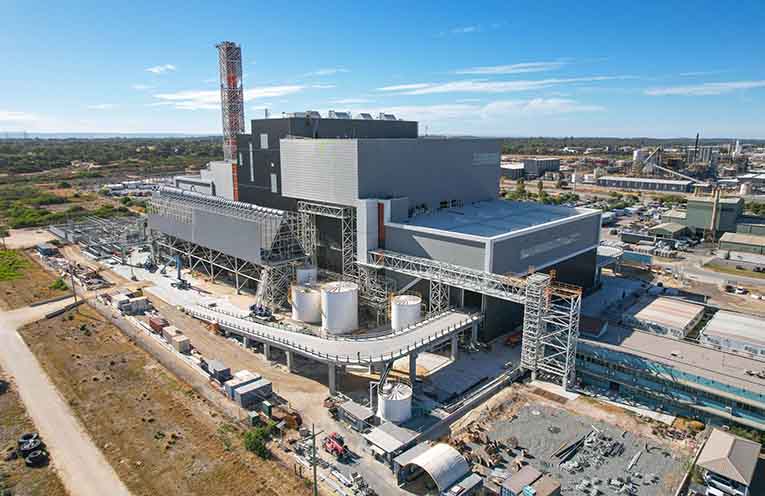
LOCAL resident Richard Simshauser addressed last month’s Nambucca Valley Council meeting to “educate and inspire”, presenting options for creating and storing energy that may apply to the region.
Calling upon his 50 years of electrical industry experience, Mr Simshauser explained that this field is undergoing changes and urged the Council to consider now what choices would provide better outcomes for the Valley.

He believes that the future of electricity lies in renewable energy sources such as solar and explained the trend is towards phasing out non-renewable energy sources such as coal.
He told Council that plastic waste was expected to “double or triple in coming years” and suggested one option was an ‘Energy-from-Waste’ (EfW) plant to combat rising piles of non-biodegradable land fill.
“Could this council share with adjoining councils to build a garbage and plastic waste incinerator that produces electricity?” he asked.
EfW technology involves burning waste at high temperature to drive turbines which create electricity.
Australia’s first EfW facility opened in 2025, in the City of Kwinana in Western Australia, processing up to 460,000 tonnes of local waste per year.
The Western Metropolitan Regional Council, a joint organisation of five Perth member councils, is currently constructing two similar facilities.
In NSW, the $1.5 billion Parkes Energy Recovery project would be Australia’s biggest, however it is not without its critics.
Last month, the ABC’s 7.30 program ran a segment on the initiative, discussing community opposition to the plan.
Parkes Shire Council has also voiced its opposition.
Mr Simshauser also urged Council to consider energy storage and solar generation in future planning developments.
“We must be better managers locally, make choices early so we have our own needs met and environments managed sustainably,” he said.
He spoke about the loss of energy when power is transported across large distances and encouraged the Council to think about localising its energy base.
Some of his suggestions included:
– Conduct an audit of its available roof space to assess total solar generation capacity.
– A requirement for new commercial buildings to be strength rated so that all roof space can be utilised for solar panels.
– Consider current developments in EV charging and the best location for chargers.
– Make street lighting and sewerage pumping carbon neutral.
– Consider the best location for installing large batteries to store excess energy – especially in new developments such as the Valla industrial area (VUGA).
– Consider whether a solar farm could be located in the Valley.
– Look for opportunities for State and Federal Government assistance in energy creation and storage.
“These are just some of the many subjects available to be considered to increase our sustainability,” he concluded.
Councillor Ljubov Simson asked Mr Simshauser about the viability of installing a solar farm on top of a water storage area such as Bowra Dam.
Mr Simshauser saw this as problematic due to accessibility, repairability and the use of such new technology.
He believed it would be much easier to utilise existing buildings.
Nambucca Valley Council has a Clean Energy Committee which meets regularly to discuss these kinds of issues.
By Ned COWIE