THIS year marks 75 years since Australia first introduced National Service and for many families across the Nambucca Valley, it’s not just a chapter in the history books.
It’s personal.
It’s the uncle who disappeared off to basic training during the footy season.
The apprentice who swapped overalls for khaki.
The 20-year-old whose birthday number came up in the “lottery” and suddenly found himself bound for the other side of the world.
In the decades following World War II, compulsory National Service called thousands of young Australian men into uniform through a ballot system commonly known as the “birthday lottery”.
Between 1964 and 1972 alone, more than 60,000 Australians were called up, with over 15,000 serving in Vietnam.
For regional communities like the Nambucca Valley, those numbers weren’t abstract.
They were sons, brothers, workmates and footy teammates.
Their absence was felt at kitchen tables, dairy sheds, building sites and Saturday matches.
Some returned with lifelong friendships and a sharpened sense of purpose.
Others carried the quieter burdens of war.
All were shaped by a system that gave little choice, only duty.
The scheme itself came and went in various forms.
First introduced in 1951, the early years required selected men to complete 179 days of military training across the Army, Navy or Air Force.
By the mid-1960s, legislation meant National Servicemen could be sent overseas as Australia became involved in regional tensions, including Konfrontasi with Indonesia and later the conflict in Vietnam.
Not every Nasho looks back with resentment.
For many, the experience proved life-changing in positive ways.
Nambucca Valley resident Don McKenzie told News Of The Area that it was the “best thing that ever happened to me and my mates.”
“Some of the lads I was with were very lost in life and had no direction; however, by the time their National Service had ended, they were men with real purpose.”
Don is among those who believe the scheme, or something like it, could still have value today.
Commemoration remains deeply important to former servicemen.
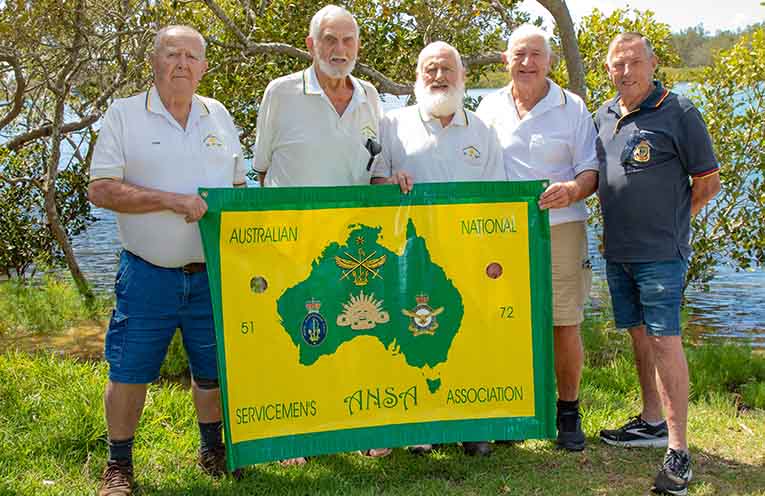
Fellow Nasho Alan Dollin said Nashos Day, marked each year on 14 February, carries special meaning.
“Each year there are fewer of us left and we want the day to be commemorated long after we are gone so that younger generations never forget those that answered the call from their country.”
Nambucca Heads RSL Sub Branch President Denis Lane points out that bonds formed through service never truly fade, those connections are still strong.
“When you are a member of the armed services you form bonds that are hard for many in civilian life to understand,” he said.
“When these Nashos get together on Nashos Day each year, it is a time when those bonds are reaffirmed.”
National Service officially ended in 1972, but the legacy of the Nashos remains woven through the fabric districts like ours, in Anzac Day marches, faded photos on mantelpieces, old unit badges tucked away in drawers, and stories retold around family tables.
Seventy-five years on, the “birthday lottery” generation is still remembered.
The public are invited to come to the Nambucca Heads Cenotaph, at the foot of the RSL Club car park, at 11:00 am on Saturday 14 February to join with others remembering the Nashos.
By Mick BIRTLES