
THERE is an old adage that, if you try to please everyone, you end up pleasing no one.
This might be the case with the Great Koala National Park (GKNP).
Legislation to create it has been introduced to NSW Parliament and the Labor Government says it reveals “new details about how the park will protect koalas while keeping forests open for people to explore and enjoy”.
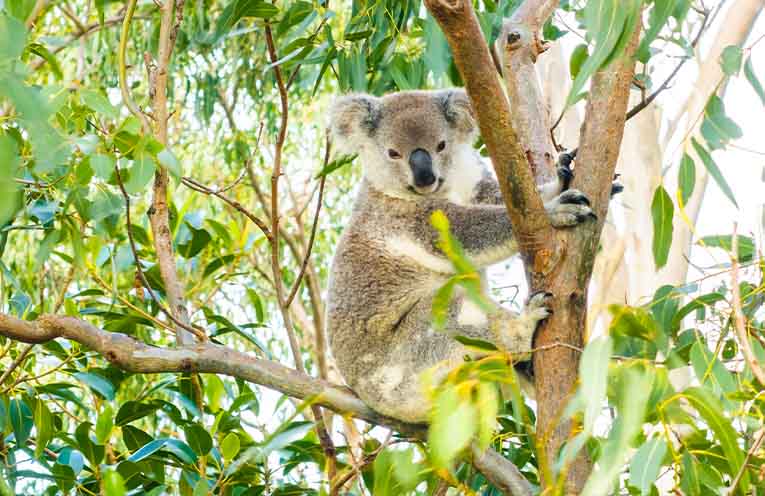
The National Park Estate (Great Koala National Park Reservations) Bill 2026 will add more than 178,000 hectares of state forest and other Crown land to the national park estate on the NSW Mid North Coast, and the Government says it will protect important habitat for an estimated 12,000 koalas, 36,000 gliders and more than 100 threatened species.
When combined with existing national parks and reserves, it will be one of the largest parks in NSW, creating a protected area spanning more than 475,000 hectares.
The Bill includes different reserve categories across the park, allowing a wide range of recreational activities to continue alongside conservation.
Thirteen per cent of the added land will be designated regional park, supporting more intensive recreation and community activities, allowing visitors to engage in a range of activities including bushwalking, trail running, camping, kayaking, canoeing, horse riding, trail-bike riding, four-wheel driving, fishing, and mountain-bike riding, as well as dog-walking in select reserves.
“From bushwalking and canoeing to mountain-bike riding and camping, we’ve listened to how people want to enjoy the park and we’re making sure that while we save koalas, the Great Koala National Park can also be a world-class area for recreation,” said Minister for the Environment Penny Sharpe.
The Government said the Bill supported affected workers, including those from Forestry Corporation NSW.
“We made a promise to create a Great Koala National Park and to support workers, and we’re delivering on that commitment,” said Minister for Agriculture and Regional NSW, Tara Moriarty.
The North East Forest Alliance (NEFA) welcomed the announcement “as an historic step forward in the conservation of NSW’s forests and their long-suffering inhabitants”.
“We appreciate the need for some areas to be made into Regional Parks to accommodate the spectrum of recreational uses, though believe many of these are allowed for in national parks, and some of these areas would have been better managed as such,” a spokesperson said.
The Bob Brown Foundation also greeted the announcement positively.
“Today, we celebrate the tenacity and commitment of the First Nations people, the Gumbaynggirr people, the frontline defenders, the ecologists and community conservationists who have held strong and maintained their dedication to seeing the Great Koala National Park delivered,” said Doro Babeck, Bob Brown Foundation’s NSW Campaigner.
Ashley Love, Bellingen Environment Centre Forest spokesperson, and Deanna Markovina, from Forest Ecology Alliance (FEA), were more circumspect.
They suggest seven priority actions needed to ensure the GKNP delivers on the community’s original vision of a world-class protected area.
They want the NSW Government to consider full and proper consultation with First Nations people, to include additional strategic conservation lands within the GKNP, and improve water security through expanded forest protection.
Mr Love and Ms Markovina also want the Government to commission targeted scientific assessments of koala populations, support World Heritage assessment and potential nomination, support koala conservation across all land tenures (including private land), and assess and investigate proposed visitor areas and associated developments.
Steve Dobbyns, Chair of Forest & Wood Communities Australia (FWCA) said he had serious concerns about the legislation, particularly its implications for the North Coast timber industry, parliamentary oversight and the proposed carbon financing arrangements.
He pointed out that the park was a government election commitment long before the carbon method was approved.
“That raises a fundamental question: are taxpayers being asked to fund carbon credits for a decision the Government had already made?” Mr Dobbyns asked.
Mr Dobbyns has concerns about jobs and the wider timber industry, conservation and forest management.
“Nobody disputes the importance of protecting koalas and biodiversity,” he said.
“What we dispute is the assumption that permanently removing sustainable timber production automatically delivers better environmental outcomes.
“The Government should be required to demonstrate the measurable conservation benefits, not simply announce the number of hectares it has locked up.”
Member for Oxley Michael Kemp has called on Nambucca Valley Councillors to approve an expansion of its waste management facility ahead of the commencement of the Great Koala National Park.
“After six years of planning, assessment and professional advice by Council staff on the Valley’s long-term waste needs, it’s time to get a move on,” Mr Kemp said.
“To defer this decision after six years of large-scale assessments and professional advice, all paid for by ratepayers, shows just how disconnected these councillors have become from reality.
“This is what happens when councillors become more interested in playing politics and grandstanding, rather than delivering for the Valley.
“I deal with four different councils across the Oxley electorate, and this must be the most short-sighted decision I’ve seen in my time in this seat.”
Kemp said not securing this land before the park is gazetted risks the ability of Nambucca Valley Council to manage its own waste in the future.
“I have given Council a month to work through this issue, but now it’s nearly too late,” he added.
“If Council waits until after the koala park is gazetted, they are leaving the security of ratepayers up to the whim of this or a future green-leaning minister.
“Nambucca Valley cannot afford a council paralysed by politics, where councillors are more concerned about looking like conservationist pin-ups than dealing with the real problems facing our community.”
Love and Markovina said the largest koala population in NSW had long been studied in Pine Creek State Forest, yet was actively being logged.
They cited the Forest Bridge Proposal, put forward by the Friends of Pine Creek, which has consistently been supported by environmental groups, councils and local communities for inclusion within the GKNP, and another vital coastal wildlife corridor forest, Tuckers Nob, soon scheduled for extensive logging.
They believe that unless the Government took a more holistic approach to the GKNP, there was
still a strong possibility of koala populations declining.
It seems that all interested parties in the GKNP’s creation might have longer to wait.
By Andrew VIVIAN