
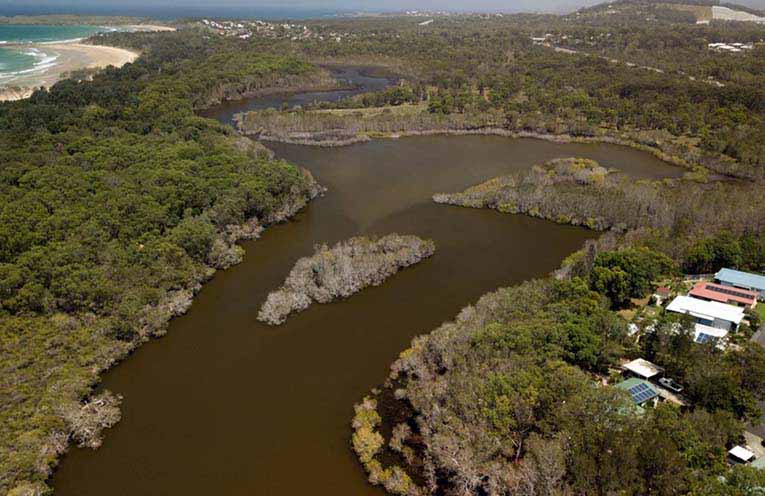
LOCALS have known that Hearnes Lake and other Coffs Coast catchments have contained evidence of toxic chemicals at unsafe levels for quite a while.
In 2021 Hearnes Lake Catchment Management Group, under the auspices of the Sandy Beach Action Group (SANDBAG) used a $9,000 Council Environmental Levy grant to collect water samples from waterways flowing into Hearnes Lake and test them.
At the time, Maxine Rowley, a water quality expert who coordinated the project, warned that the community should be aware of the risks from the cocktail of agricultural chemicals detected by the Group.
The NSW Environment Protection Authority (EPA) has since stepped up targeted pesticide compliance activities in northern Coffs Harbour catchments.
After the first 12 months of a Mid North Coast pesticide water monitoring project, the EPA said data collected since mid-2025 identified recurring pesticide detections at multiple sites in the Coffs Harbour region, while detections in Nambucca Valley waterways were infrequent and occurred at low levels.
EPA officers collected quarterly water samples from 20 priority waterways across the Coffs Harbour and Nambucca Valley LGAs and analysed the samples for more than 150 common pesticides and 31 trace metals.
NSW EPA Director of Field Operations Greg Sheehy said the data has helped identify pesticide hotspots and guide targeted compliance action across the region.
“Monitoring over the past 12 months identified regular pesticide detections at a number of Coffs Harbour sites, particularly in the Willis Creek and Hearnes Lake catchments, where pesticides were detected in every sampling round,” he said.
“This data has been invaluable in helping us identify where pesticides are likely entering local waterways, allowing us to launch several targeted investigations, step up our compliance work and take decisive regulatory action.”
Mr Sheehy said monitoring results from the Nambucca Valley area showed just one pesticide detection across all four sampling rounds.
“This is a positive result and shows that Nambucca Valley waterways are not currently being significantly impacted by pesticides.
However, it’s important that we continue monitoring these waterways as horticultural pesticide use increases in the Nambucca Valley area.”
The EPA has completed several investigations in the Willis Creek and Hearnes Lake catchments since the project began.
These have resulted in a range of enforcement actions, primarily related to cucumber-growing operations, including a $30,000 penalty notice for a water pollution offence, a $1,000 penalty notice for unqualified pesticide use, a clean-up notice, and multiple warnings and cautions for poor record keeping and other non-compliances.
Several investigations in the Willis Creek and Hearnes Lake catchments are ongoing.
The EPA is now calling on cucumber growers in the region to improve pesticide management practices, including capturing wastewater, or risk further regulatory action.
Sampling will continue at priority waterways in both LGAs on a quarterly basis, with results informing ongoing pesticide compliance, education, and enforcement activities to protect the local environment.
City of Coffs Harbour councillor, Jonathan Cassell, has been active in keeping the city focused on water quality issues.
“It is welcome news that the EPA are targeting dodgy growers across the Coffs Coast but especially in the Hearnes Lake catchment,” Cr Cassell said.
“While this is a good start, the EPA must continue to act in the best interests of our waterways and wider community.
Clean estuaries mean cleaning up this industry now and into the future.”
By Andrew VIVIAN