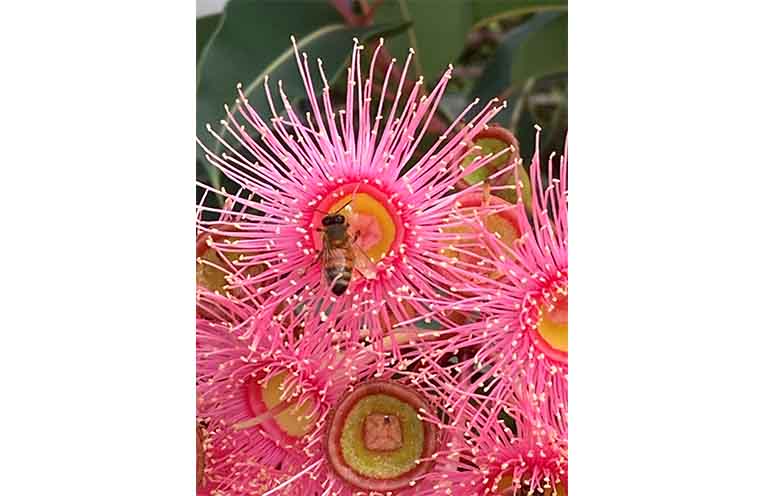
THE free pollination Australian growers have relied on for generations is disappearing, and horticulture bodies are urging farmers to plan for a future where managed bee pollination is a budgeted necessity rather than something the landscape simply provides.
The warning follows an ABC Landline program which shone a light on the impact of Varroa mite on pollination across the country, prompting a joint call to action from the National Farmers’ Federation (NFF) Horticulture Council and the Australian Honey Bee Industry Council (AHBIC).
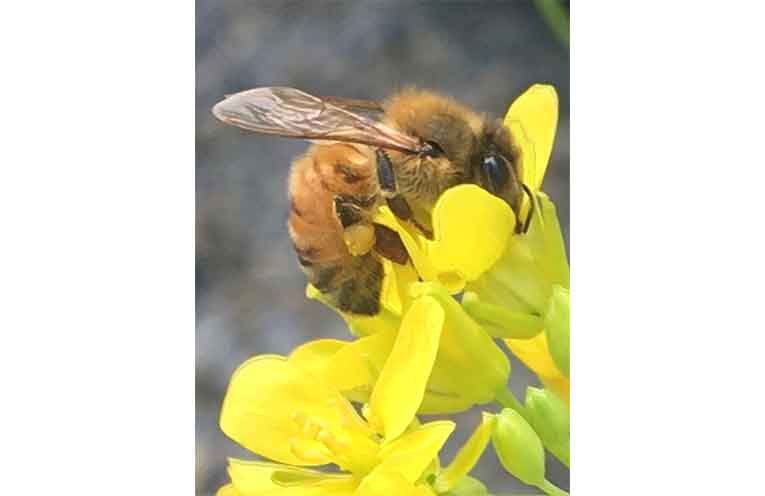
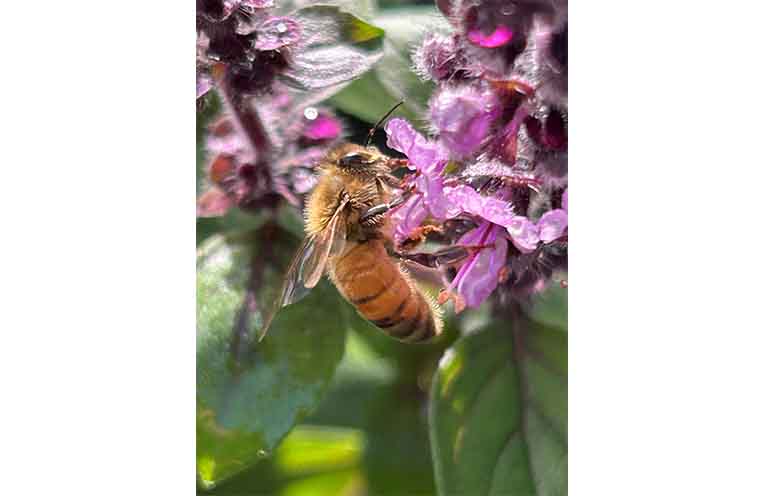
Varroa destructor is a tiny external parasite that attaches to honeybees, feeding on their fat reserves and the fat reserves of developing larvae, weakening individual bees and entire hives.
Left unmanaged, infestations can collapse a hive within a few months – the mite reproduces within just 20 days, meaning a small number of mites picked up from a neighbouring hive can multiply from a handful to thousands in a short space of time.
The mite also acts as a vector for several damaging bee viruses, compounding the threat to colony health.
First detected in Australia in 2022, Varroa is now established across New South Wales, Queensland, Victoria, South Australia and the ACT, with only Western Australia and Tasmania remaining free of the pest.
The initial response focused on control and eradication, before authorities shifted to the Transition to Management program in September 2024, recognising that Varroa was here to stay.
That program, which provided on-the-ground help and education to support beekeepers adapting to permanent management, concluded in February this year.
For decades, much of Australia’s horticulture industry has relied on feral honeybee populations for free, incidental pollination of crops, from orchards to vegetable farms.
Varroa is steadily wiping out that invisible workforce, as wild colonies, unlike commercially managed hives, receive no treatment and are far more vulnerable to collapse.
NFF Horticulture Council executive officer Richard Shannon said the shift demands a fundamental change in how growers think about pollination.
“For decades, a large share of horticulture’s pollination has come from feral honeybees that growers never had to think about, let alone pay for,” Mr Shannon said.
“Varroa is steadily removing that invisible workforce. The growers who likely fare best from here will be the ones who treat pollination as a managed input – planned, budgeted and contracted – rather than something the landscape provides for free.”
AHBIC chief executive officer Danny Le Feuvre said the issue extended well beyond the beekeeping industry itself.
“This is not just a beekeeping problem – it is a national food production and resilience issue,” Mr Le Feuvre said. “Beekeepers are doing everything they can to keep healthy, strong hives in the system, but they are now carrying permanent management costs and the added pressure of emerging chemical resistance. Growers and beekeepers are in this together, and securing pollination for Australia’s horticulture industries depends on us planning side by side.”
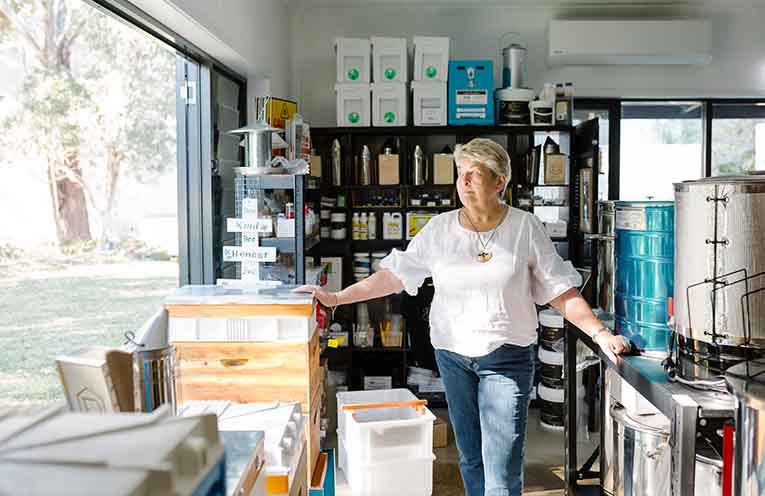
The financial pressure is already being felt at a local level. Coffs Beekeeping Supplies owner Judith Webster said she had noticed a decline in the number of beekeepers still operating on the Coffs Coast, driven largely by the rising cost of Varroa treatment and the more intensive hive management it demands.
“The cost of treatment along with the corresponding more intensive management of the hives is adding an enormous financial burden onto beekeepers,” Ms Webster said.
“Throw in the increase in fuel, insurance, the cost of equipment and power, and this is impacting our business as beekeepers look for ways to cut costs.
“The cost of honey and pollination services will need to increase to cover the extra costs to beekeepers.”
European honeybees remain critical to Australia’s food security. They pollinate a vast share of the fruit, vegetable and nut crops that stock supermarket shelves, with many commercial crops entirely dependent on insect pollination to set fruit at all.
Without sufficient pollination, yields can drop sharply, directly affecting both farm incomes and food availability.
It’s a role native pollinators are not equipped to fill at scale. Many of Australia’s native pollinators do not effectively pollinate European-derived food crops and are not suited to large-scale agriculture.
When European settlers first arrived in NSW, food supply was one of the colony’s greatest challenges, as native pollinators struggled to pollinate the new European crops and fruit trees.
It wasn’t until honeybees were introduced in 1822 that the colony was able to grow crops effectively and begin building food security – a 30-plus-year experiment with native pollination alone that ultimately fell short.
The two organisations are urging growers to act early rather than wait until pollination becomes scarce or expensive in their region.
Recommended steps include understanding a crop’s specific pollination requirements, building relationships with reliable commercial pollination providers well ahead of flowering season, and factoring rising hive costs into farm budgets through a written pollination plan.
To support the transition, the NFF Horticulture Council and AHBIC will co-host a national grower webinar on managing pollination in a Varroa-endemic Australia, running from 12pm to 1.30pm AEST on Wednesday 5 August. The session will cover what the end of the Transition to Management program means on farm, how to structure pollination agreements, and practical steps growers can take to protect pollination security across horticulture commodities.
By Kate PYE