
THE passage of the National Park Estate (Great Koala National Park Reservations) Bill 2026 through the NSW Parliament has been widely celebrated, and it is the culmination of years of collective hard work and dedication.
As its proponents look to the future, Sandy Greenwood is concerned that the voices and contributions of Gumbaynggirr Custodian might be overlooked.
“I acknowledge and respect the immense work of everyone who has fought for the forests, including Ashley Love and the many other dedicated people and groups involved,” she said.
“This is not about diminishing anyone else’s contribution but our Elders, our custodians and our community made a powerful contribution to the fight to protect these forests.
“We stood up for our cultural rights, our sacred sites, our totem and our Country when we had very little behind us except our determination and our responsibility to our ancestors and future generations.”
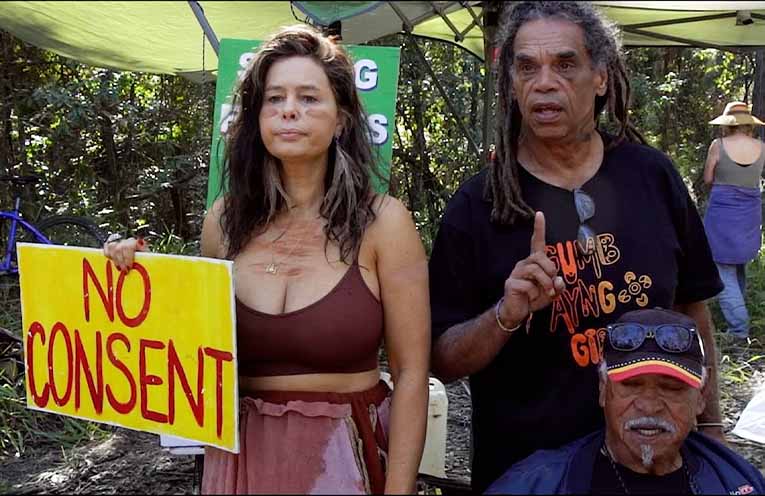
Ms Greenwood is a Gumbaynggirr, Dunghutti & Bundjalung Custodian and award-winning actor and filmmaker who has been campaigning to put Gumbaynggirr cultural rights and custodianship at the centre of the fight for the Great Koala National Park (GKNP) since 2020.
“With no funding, no platform and very few resources, my Elders and I fought to protect our Country and achieved an extraordinary four Stop Work Orders across six years in the Land and Environment Court, legal precedent,” she said.
In the middle of lockdown in 2020, she became the first individual Aboriginal applicant in history to go to the Land and Environment Court about forestry operations in Nambucca State Forest.
With a pro bono lawyer, Gumbaynggirr Custodians won a Stop Work Order, the first on Gumbaynggirr Country in 25 years.
Ms Greenwood and the Gumbaynggirr Conservation Group proposed transforming Nambucca State Forest into a cultural heritage park that would protect koala habitat while creating employment for Gumbaynggirr people as rangers and cultural knowledge holders.
Under the vision, Gumbaynggirr rangers and cultural knowledge holders would help care for the forest, protect koala habitat, share cultural knowledge and ensure that the significance of the land was understood and respected.
“We were putting forward a vision for how our Country could be cared for,” she said.
“We wanted Nambucca State Forest protected as a cultural heritage park, where koalas could be safe and Gumbaynggirr people could be employed as rangers and cultural knowledge holders.
“This was a model that could be extended across Gumbaynggirr Country. It was about protecting our culture, our sacred places and our forests, while creating employment and passing our knowledge on to future generations.
“In 2020, we began a campaign that put Gumbaynggirr cultural rights and custodianship at the centre of the fight.
We challenged forestry laws and demanded that cultural heritage protections be examined.
“We made the connection between the destruction of our forests, our sacred sites and our totem, the Dunggirr, the koala.
“We brought our cultural responsibilities as Traditional Owners into the legal arena and stood up for our right to protect Country.”
A stop work order was also issued for Wild Cattle Creek State forest and actions halted work in Lower Bucca and Newry State Forests.
Ms Greenwood wants people to understand that the Elders are elderly and, as a tribe, carry generations of trauma.
“They stood on the front line in rain, hail or shine and kept the sacred fire burning and put so much on the line to protect Country,” she said.
They sacrificed enormously.
“Collective victories must not erase the people who helped make them possible.
“I have watched too often as Gumbaynggirr people’s hard-won achievements become part of a broader story without our contribution receiving the recognition it deserves.
“Gumbaynggirr people were not just part of this story.
“We helped change the law.
“Our Elders deserve recognition and our contribution to the story of the Great Koala National Park must be remembered and acknowledged in the history books.”
By Andrew VIVIAN