
HORTICULTURAL producers on the North Coast are urged to strengthen nutrient management practices, as new research shows woodchip bioreactors reduce fertiliser pollution.
Field trials led by Southern Cross University (SCU) in partnership with North Coast Local Land Services and City of Coffs Harbour, show the latest bioreactor designs can cut nitrate runoff into waterways by up to 99 percent.

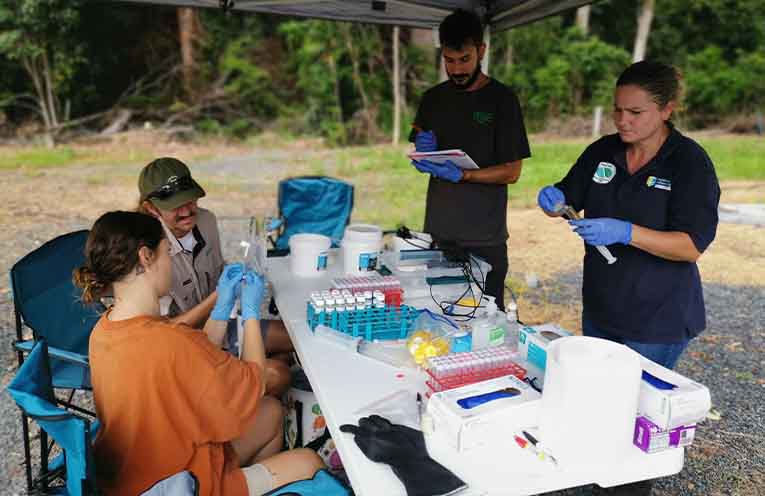
SCU National Marine Science Centre Professor Christian Sanders said the results were possible due to detailed research by PhD student Rebecca Woodrow.
“[Rebecca] was able to show the effectiveness of bioreactors using specialised equipment,” he said.
Research has revealed that poorly managed systems can produce nitrate levels thousands of times higher than recommended guidelines.
North Coast Local Land Services Senior Land Services Officer Shaun Morris said, “Our research shows bioreactors can help treat a range of farm effluents including nitrate, phosphate and pesticides before they leave the property.
“Efficient irrigation plays an equally critical role in nutrient management.
“Drip irrigation systems, accurate scheduling, and monitoring soil moisture can significantly reduce fertiliser loss while maintaining crop performance.”
The systems use woodchips to foster naturally occurring bacteria that convert excess nitrate into harmless nitrogen gas before it leaves the farm.
The technology is valuable for intensive horticulture near sensitive environments such as Solitary Islands Marine Park.
Excess nitrate runoff not only harms aquatic ecosystems but can also release nitrous oxide, a greenhouse gas significantly more potent than carbon dioxide.
North Coast Local Land Services General Manager Alison Bowman said, “Climate variability, intense rainfall events and rising environmental risks are already affecting farming on the North Coast.
“Bioreactors are a valuable mitigation tool, but long-term protection of waterways relies on improving how nutrients, water and chemicals are managed across the farm.”
Ongoing work aims to refine these systems and promote wider adoption across the region.
By Sis HIGGINS